Why Some People With Nerve Pain Never Get Better -- And What a Doctor Found Trying to Save His Wife From Amputation
Discover the one nutrient that targets the hidden "nerve plaque" most doctors never test for
Watch The Free PresentationFree to watch. No signup required.
She used a walker just to reach the kitchen. Her surgeon was already talking about removing her leg. Then her husband found something buried in the research -- and now she walks the dog every single morning.
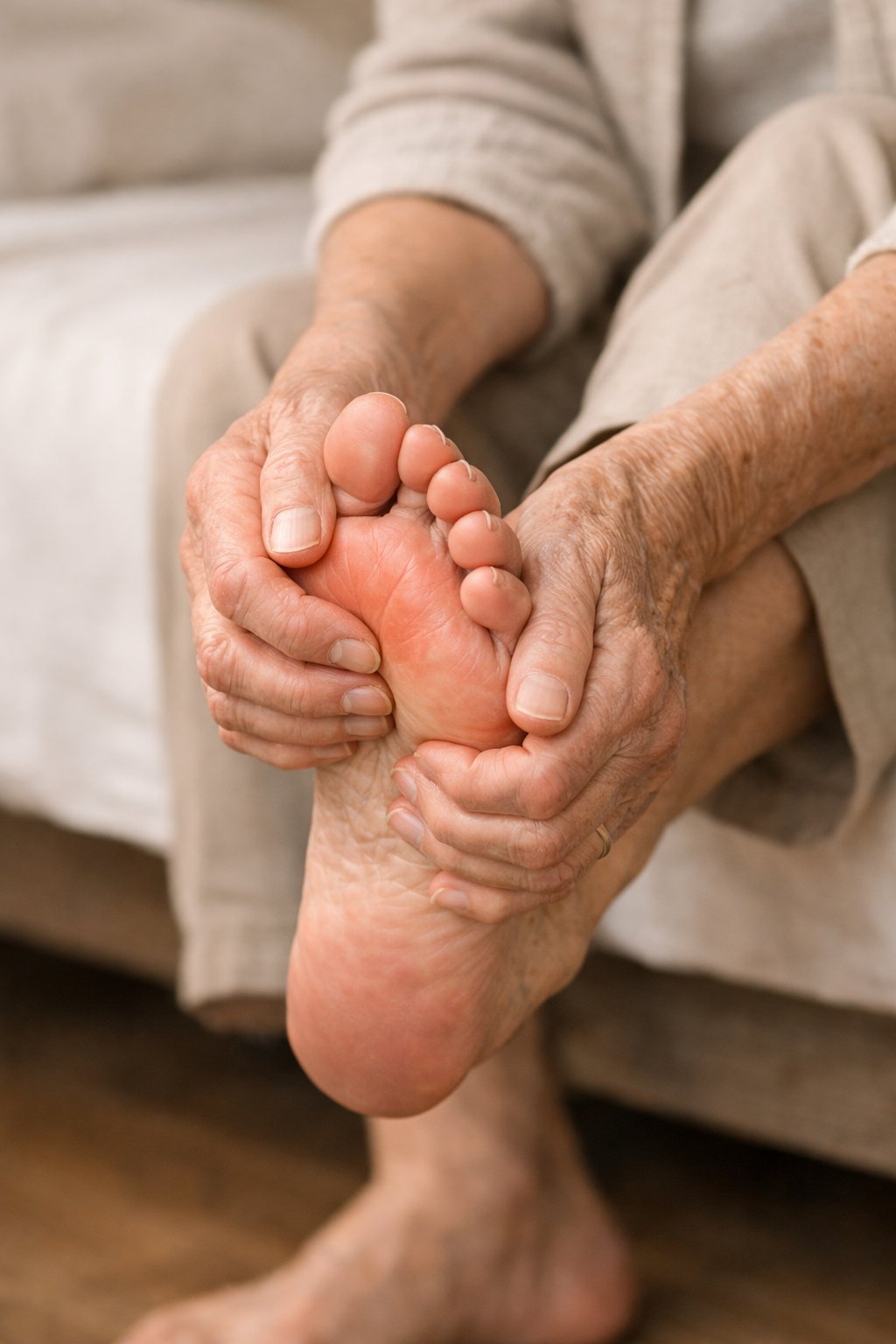
Margaret Whitfield was 64 years old when her surgeon said the word out loud. Amputation. She had been dealing with neuropathy for two years by then. The burning in her feet kept her up most nights. Getting from the bedroom to the bathroom meant holding the wall. She had a walker she hated using. She had stopped making plans.
Her husband James is a doctor. He had tried everything he knew -- every prescription, every supplement, every recommendation from her specialists. Nothing worked. He watched her shrink. Not just physically. She stopped talking about next summer. She stopped looking forward to things.
"I wasn't looking for a miracle. I was just trying to buy her more time."
That winter, he went back through research he had never had reason to read before. And deep in a stack of studies -- the kind that never make it into mainstream medicine -- he found something that stopped him cold.
The Real Reason Nerve Pain Keeps Coming Back

Most people think nerve pain is just damaged nerves. What Dr. Whitfield found was different.
The research pointed to something called nerve plaque -- a buildup that forms around the nerve pathways and slowly clogs them, like rust building up inside a pipe. The nerves themselves may be fine. But when plaque builds up around them, the signals get scrambled. Burning. Tingling. Numbness. Pain that comes out of nowhere at 3am.
And here is the part that shocked him: this plaque is fed by everyday toxins. Cooking oils. Air pollution. Tap water. Things every American is exposed to, every single day. The body tries to clear it. But after a certain age, in a lot of people, it simply cannot keep up.
This is why most treatments fail. They treat the symptoms -- the burning, the tingling, the pain. They never touch the plaque that is causing them.
It is like mopping the floor while the pipe above you is still leaking.
Dr. Whitfield kept digging. He found research that had never been connected to neuropathy before -- Nobel Prize-level science on how the nervous system actually repairs and protects itself. And buried inside that research, a specific compound that had shown something remarkable.
The Nutrient Hidden in Plain Sight
The compound is called Corydalis yanhusuo. Most Americans have never heard of it. It does not have a TV commercial. You will not find it at the drugstore. But in clinical research, people using it reported a 27.6% improvement in nerve comfort -- not by numbing the pain, but by going after the root cause.
Dr. Whitfield combined it with two other compounds he found in the research. One of them works by blocking the pathway that sends false pain signals -- the kind that fire even when there is no real injury. The other supports the conditions your nerves need to recover.
- A root-cause mechanism most neuropathy treatments completely ignore
- A natural compound with documented 27.6% improvement in nerve comfort
- A secondary compound that quiets false pain signals at the source
- A third compound tied to Nobel Prize-winning research on nerve recovery
- A simple before-bed routine -- the same one his wife followed
What Happened Next

Margaret started the routine before bed. It took less than two minutes. She did not tell anyone what she was doing -- she did not want to get her hopes up.
The first thing she noticed was sleep. She was getting through the night. Then the burning started to quiet down. Then one morning she walked to the kitchen and realized halfway there that she had not grabbed the wall.
The walker is in the garage now, behind the holiday decorations. She walks their dog every morning. Last month she climbed the stairs to their bedroom and did not hold the railing. Her husband stood at the bottom and watched her do it.
He recorded everything he found -- the mechanism, the research, the routine, the exact compounds -- in a presentation he released because he believes what happened to Margaret does not have to be as rare as it is.
"I have had burning feet for three years. I sat down to watch for a few minutes and stayed for the whole thing. I have not felt this much hope in a long time."
"My doctor never mentioned any of this. I sent it to my sister who has had the same problem for years. We both watched it twice."
"I was skeptical going in. I am still cautious. But I could not find a single thing in what he said that did not check out."
Educational presentation only. Individual results vary. Not intended as medical advice.